
Snow Leopards: Nature's Resilient Survivors
- Alex Lapeyrolerie
- Feb 16
- 3 min read
Updated: Mar 19
Snow Leopards Live at Extreme High Altitudes
Snow leopards are the only big cats that can survive at altitudes between 11,000 and 16,500 feet above sea level. This is higher than most mountain climbers can reach without supplemental oxygen. The thin air and rugged terrain of the Himalayas and surrounding mountain ranges create a challenging environment. Yet, snow leopards have evolved to thrive here, making them apex predators in these remote regions.
Their bodies are built for this altitude. They have large lungs and strong hearts to cope with low oxygen levels. Their powerful limbs allow them to leap across cliffs and navigate steep slopes with ease. For filmmakers and stunt performers, this mastery of difficult terrain is a reminder of how physical adaptation and skill can overcome extreme challenges.
Masters of Stealth and Camouflage
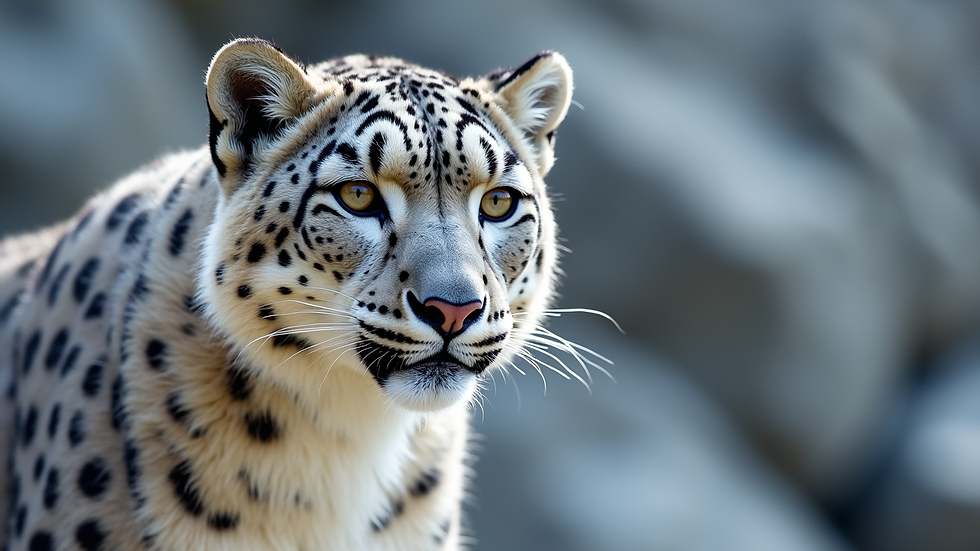
Snow leopards earned the nickname “Ghosts of the Mountains” because of their incredible ability to move silently and remain unseen. Their thick fur is patterned with rosettes and spots that blend perfectly with rocky, snowy landscapes. This camouflage helps them stalk prey without being detected.
They move with a quiet grace, stepping lightly on rugged cliffs and loose rocks. One moment, you might catch a glimpse of their pale fur against the stone; the next, they disappear as if they were never there. This stealth is essential for hunting elusive mountain goats and sheep.
For creatives, the snow leopard’s ability to blend into its environment offers a powerful metaphor for subtlety and precision in storytelling or performance.
Snow Leopards Cannot Roar
Unlike lions or tigers, snow leopards cannot roar. Their vocal cords are structured differently, which limits the sounds they can make. Instead of a roar, they communicate through chuffing sounds, yowls, growls, and hisses. These vocalizations serve as warnings or signals to other snow leopards.
This fact surprises many people who expect all big cats to roar. It highlights how evolution shapes animals in unique ways depending on their environment and lifestyle. For those working in film or stunt work, it’s a reminder that appearances can be deceiving—what looks like a fierce predator may have unexpected traits.
Adapted to Survive Freezing Temperatures
Snow leopards endure temperatures as low as -40 degrees Fahrenheit. Their thick, dense fur provides insulation against the cold, while their wide, fur-covered paws act like natural snowshoes, distributing their weight to prevent sinking into snow.
Their long tails help with balance on steep slopes and wrap around their bodies for extra warmth during rest. This combination of physical traits allows them to live comfortably in freezing conditions that would be deadly for many other animals.
For stunt performers and filmmakers, the snow leopard’s cold-weather adaptations show how gear and technique can be designed to meet extreme environmental demands.
Snow Leopards Face Serious Threats
Despite their impressive adaptations, snow leopards are vulnerable. The International Union for Conservation of Nature lists them as Vulnerable, with only about 2,700 to 3,400 mature individuals left in the wild. Their population is declining due to habitat loss, poaching, human-wildlife conflict, and climate change.
Loss of prey species and shrinking habitats force snow leopards into closer contact with humans, increasing risks for both. Conservation efforts focus on protecting habitats, reducing poaching, and promoting coexistence with local communities.
Understanding these threats adds urgency to the need to protect these majestic animals. For creatives and storytellers, sharing the reality behind the fear snow leopard myths can help raise awareness and support conservation.
The Importance of Conservation Efforts
Conservation is not just about saving a species; it's about preserving a way of life. Snow leopards play a crucial role in their ecosystem. They help maintain the balance of prey populations, which in turn supports the health of the entire mountain habitat.
When we think about the snow leopard, we should also consider the communities that live alongside them. These communities often face challenges that can lead to conflict with wildlife. By promoting education and sustainable practices, we can foster a harmonious relationship between humans and snow leopards.
Embracing the Spirit of the Snow Leopard
In our own lives, we can draw inspiration from the snow leopard. Their resilience in the face of adversity reminds us to adapt and thrive, no matter the challenges we face. Just as they navigate their rugged terrain, we too can find ways to overcome obstacles and pursue our goals.
So, how can we embody the spirit of the snow leopard? It starts with embracing our unique strengths and learning to adapt. Whether you're an artist, athlete, or simply someone seeking growth, remember that like the snow leopard, you have the power to make an impact.
Let’s take a moment to reflect. What challenges are you facing? How can you adapt and thrive in your own environment? Just as the snow leopard blends into its surroundings, you too can find your place and make your mark.


Comments